


Carbide end mills represent a powerful tool in the machining industry, known for their hardness and precision. Fabricated from a compound of carbide and tungsten, these tools are designed for performing high-speed operations and encompass a wide variety of cutting geometries suitable for different machining tasks. With the evolution of technology, updated variations have been introduced to enhance performance across a range of materials and applications. This guide will delve into the technical specificities, classifications, and advancements of carbide end mills that are pivotal for professionals seeking to optimize their milling operations in 2024.
What is a Carbide End Mill?

Definition of carbide end mill
A carbide end mill is a type of industrial cutting tool used primarily in milling operations, which is the process of cutting and shaping materials like metal by feeding a workpiece past a rotating multipoint cutter. End mills are distinguished from other types of milling cutters by their geometry and design, including the number of flutes or cutting edges they possess. Carbide end mills, specifically, are made from a composite material in which tungsten carbide particles are cemented together with a metal binder—typically cobalt or nickel.
Carbide is valued in the machining industry for its exceptional hardness and thermal stability, which allows carbide end mills to maintain their cutting-edge sharpness at high temperatures that are often generated during high-speed milling operations. This hardness also translates to a longer tool life as compared to their high-speed steel (HSS) counterparts.
The key parameters that define a carbide end mill include:
- Flute Count: The number of flutes on the tool ranges generally from 2 to 8, where a higher number can enhance finish quality. In comparison, a lower number allows for more efficient chip evacuation.
- Cutting Diameter: This varies based on the workpiece size and the required precision, and it directly affects the cutting speed and feed rate.
- Helix Angle: The angle of the spiral on the tool’s cutting edge influences the cutting force, heat management, and quality of the finished surface.
- Coating: Many carbide end mills have coatings such as Titanium Aluminum Nitride (TiAlN) to extend tool life by reducing wear and providing thermal protection.
- End Geometry: Depending on the machining task, end mills can have different profile geometries such as square, ball nose, and corner radius, each suitable for specific purposes like producing flat surfaces, creating round-bottomed slots, or generating fillets, respectively.
Benefits of using carbide end mills
Carbide end mills offer several advantages that make them highly preferable in the machining industry. These benefits stem from carbide’s intrinsic material properties and are further enhanced by the design characteristics of the end mills themselves:
- Superior Wear Resistance: Carbide’s remarkable hardness provides significant wear resistance, which leads to an extended service life for the tool. This reduced wear rate is crucial for maintaining dimensional accuracy over extended production runs.
- High-Temperature Stability and Performance: The thermal stability of carbide means that end mills can operate effectively at higher temperatures without losing their cutting edge. This allows for higher speed and feed rates, increasing productivity.
- Improved Finish Quality: The rigidity and durability of carbide allow for producing parts with excellent surface finishes, often reducing or eliminating the need for subsequent finishing operations.
- Versatility in Material Cutting: Carbide end mills can cut through more complex materials more efficiently than HSS tools, including but not limited to stainless steel, titanium, and high-temperature alloys.
- Cost-Effectiveness: Although the initial cost might be higher compared to HSS tools, the longer lifespan of carbide end mills delivers a better cost-per-part ratio that is financially advantageous in the long run.
- Optimized Chip Evacuation: Designs with fewer flutes are particularly adept at chip evacuation, minimizing the risk of re-cutting chips, which can impair both tool life and part finish. Conversely, tools with higher flute counts can produce finer finishes on the workpiece.
Choosing the correct carbide end mill for a particular application involves considering these benefits in conjunction with the material to be machined, the type of machining operation, and the machine tool’s capabilities.
Types of carbide end mills available
In the realm of precision machining, various types of carbide end mills are utilized to meet the demands of specific applications. Here is a curated list of commonly available carbide end mills:
- Square End Mills: Ideal for general-purpose milling, these tools have a square end with sharp corners that produce a flat-bottomed groove with 90-degree inside corners.
- Ball Nose End Mills: With a hemispherical end, these are used for milling contoured surfaces, slotting, and pocketing. They produce excellent surface finish on workpieces.
- Corner Radius End Mills: Similar to square end mills, but with rounded corners that improve strength and eliminate sharp corners that could chip or break down.
- Roughing End Mills: Also known as “ripped” or “hogger” cutters, these are designed to remove large amounts of material quickly, with gutters designed for effective chip removal.
- Finish End Mills: These come in various designs aimed at producing a high-quality finish on the workpiece surface, often used after roughing for final shaping and smoothing.
- Drill/End Mills: These versatile tools can drill and mill simultaneously in a single pass to save time during machining processes.
- Chamfer End Mills: Featuring an angled edge, they are used for creating beveled edges on a workpiece or to help de-bur parts.
- Extended-Reach or Long-Flute End Mills: These have longer cutting edges for deep cavity milling and reduced shank diameters to avoid wall interference.
Selecting the appropriate carbide end mill pertains to the balance between the tool design and material properties, ensuring synergistic performance and superior results.
Choosing the Right Carbide End Mill
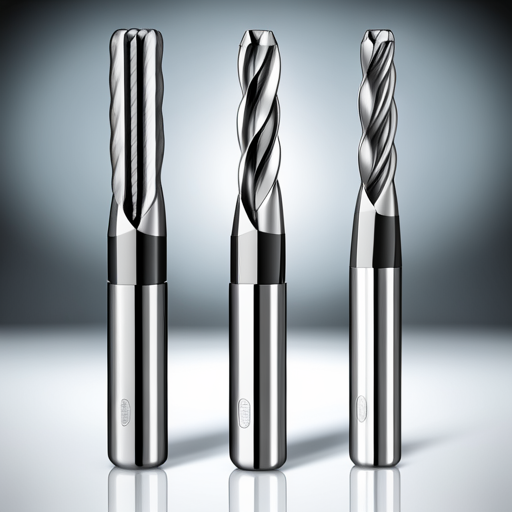
Factors to consider when selecting a carbide end mill
Material Compatibility
The first parameter to consider is the material compatibility. End mills are crafted from various carbide substrates and coatings, each tailored for compatibility with specific material types, such as steel, aluminum, or exotic alloys. The tool material impacts performance, wear resistance, and tool life.
Flute Count
Flute count, ranging from 2 to 8 or more, directly influences finish quality and chip removal efficiency. Lower flute counts are preferable for materials that produce larger chips, while higher flute counts are ideal for materials that generate more minor chips.
Helix Angle
The helix angle of the end mill affects cutting action and chip evacuation. Steeper angles ensure aggressive cutting and effective chip lifting, whereas shallow angles are suitable for finishing operations and hard materials.
Tool Coating
Tool coatings such as TiAlN or AlTiN provide additional hardness and thermal protection, enhancing tool life and performance, especially in high-temperature applications.
Cutting Diameter
Selecting the proper cutting diameter is pivotal to balance performance and strength. Smaller diameters allow for more intricate details and tighter corners, whereas larger diameters facilitate higher cutting volume.
Overall Length and Reach
Consider the overall length and reach to prevent overhang problems that could result in deflection or vibration, which compromise finish quality and dimensional accuracy.
End Profile
The end profile—such as square, ball nose, or corner radius—dictates the tool’s suitability for specific tasks such as profiling, contouring, or slotting and should be chosen based on the desired end-part geometry.
Best carbide end mills for specific materials
When selecting the best carbide end mills for specific materials, it is crucial to consider the unique properties of each material, which will dictate the requirements for the end mill used. Here are some recommendations categorized by material type:
For Aluminum and Non-ferrous Metals
- Flute Count: Higher flute counts (3 or more) with sharp edges and high helix angles are preferred to prevent material from sticking to the tool.
- Helix Angle: A high helix angle, usually around 45 degrees, helps in effective chip evacuation.
- Tool Coating: Uncoated or a ZrN (Zirconium Nitride) coating is often recommended to prevent material adhesion.
For Steel and Alloyed Steel
- Flute Count: Moderate flute counts (4-5) offer a good balance between strength and chip evacuation capabilities.
- Helix Angle: Variable helix angles are ideal for suppressing vibrations and harmonics during the cutting process.
- Tool Coating: TiCN (Titanium CarboNitride) or AlTiN (Aluminum Titanium Nitride) provide the required hardness and heat resistance for these more rigid materials.
For Stainless Steel
- Flute Count: Lower flute counts (usually 4) with ample flute space to accommodate the tough and stringy chip nature of stainless steel.
- Helix Angle: High helix angles facilitate better chip evacuation, while variable helix designs can minimize chatter.
- Tool Coating: AlTiN or TiAlN coatings are preferable for their ability to withstand the high temperatures generated when cutting stainless steel.
For Titanium
- Flute Count: Lower flute counts (3 or less) to provide the necessary room for chip evacuation, which is critical due to titanium’s tendency to weld to cutting tools.
- Helix Angle: High helix angles are beneficial, but tool rigidity should not be compromised.
- Tool Coating: TiAlN is highly suited for titanium to resist thermal buildup.
For Hardened Materials
- Flute Count: Low to moderate flute counts ensure rigidity and manage the stress on the tool.
- Helix Angle: Lower helix angles may reduce edge chipping and extend tool life.
- Tool Coating: Advanced coatings like AlTiN or TiAlN are crucial for maintaining hardness at elevated temperatures.
For Plastics and Composites
- Flute Count: High flute counts with sharp cutting edges and larger rake angles to reduce the risk of melting or chip rewelding.
- Helix Angle: High helix angles for efficient chip removal to prevent heat buildup.
- Tool Coating: Often, polycrystalline diamond (PCD) or diamond-like carbon (DLC) coatings are used to reduce friction and prevent sticking.
By appropriately selecting end mills based on the parameters listed above, machinists and manufacturers can optimize their machining processes, ensuring high-quality surface finishes, dimensional accuracy, and prolonged tool life for varying material applications.
Understanding the different coatings for carbide end mills
Coatings for carbide end mills are engineered to increase the tool’s performance and longevity. The choice of coating impacts factors like heat resistance, lubricity, and wear resistance, which are critical in machining operations.
- TiN (Titanium Nitride): Known for its golden color, TiN provides good wear resistance and allows for higher cutting speeds. It’s an excellent general-purpose coating that suits a variety of materials, including steel, aluminum, and more.
- TiCN (Titanium Carbonitride): Exhibiting a higher hardness than TiN, TiCN boasts improved wear resistance and is suitable for cutting tools that encounter high cutting forces. It is particularly effective in machining stainless steel and cast iron.
- AlTiN (Aluminum Titanium Nitride): Featuring a high level of thermal stability, AlTiN can withstand elevated temperatures, reducing the heat transfer to the end mill, and is especially useful when machining hardened materials and alloys.
- TiAlN (Titanium Aluminum Nitride): Similar to AlTiN in terms of performance, it has a higher aluminum content, which extends tool life even further. This coating is also excellent for high-temperature applications and for cutting rigid materials like titanium.
- nACo (Nano-composite Coating): This coating provides a balance of hardness and heat resistance. The nano-composite structure increases the tool’s lifespan and is beneficial for high-speed machining applications.
- Diamond Coatings: Including PCD and DLC, these coatings offer exceptional hardness and low friction. Diamond coatings are the go-to for abrasive materials like composites, aluminum, and plastics due to their resistance to wear and ability to prevent material buildup on the cutting tool.
The properties of these coatings contribute to enhanced tool performance by reducing friction, protecting against the high temperatures generated during cutting, and offering increased resistance to the wear and tear of cutting materials of varying hardnesses. When selecting a coating, machinists should consider the material being machined, the cutting parameters, and the desired lifespan of the tool in order to achieve the most cost-effective and efficient outcome.
Tips for Proper Maintenance of Carbide End Mills

Proper cleaning and storage techniques
To preserve the functional integrity and extend the lifespan of carbide end mills, adherence to meticulous cleaning and astute storage protocols is essential. Initially, the cleaning process commences with the removal of machining debris and coolant residues, which can be accomplished through the use of specialized cleaning solutions designed for carbide tools. These solutions facilitate the dissolution of accumulated particulates without compromising the tool’s cutting edges.
Post-cleaning and complete drying are paramount to prevent oxidation and corrosion. Compressed air can expedite this process, ensuring that no moisture lingers on the tool’s surface. It is also advisable to apply a thin layer of rust inhibitor, particularly when storing the tools for extended periods, to furnish an additional layer of protection against environmental factors.
Concerning storage, each carbide end mill should be separated and housed within protective sleeves or cases that shield them from physical impacts and environmental contaminants. These containers should be composed of non-reactive materials to prevent any chemical interactions that could mar the tool’s precision.
For optimal organization and ease of access, tools should be cataloged based on specifications such as diameter, flute length, and coating type. This systematic approach not only streamlines the selection process for specific applications but also mitigates the risk of damage that can occur during hurried searches for the appropriate tool. Implementing these cleaning and storage guidelines ensures that carbide end mills deliver consistent performance, thereby optimizing their return on investment in demanding machining operations.
How to extend the tool life of carbide end mills
To optimize the lifespan of carbide end mills, meticulous attention must be paid to both operational parameters and maintenance routines. Geometric selection is paramount; choosing an end mill with the appropriate number of flutes for the material and type of cut can reduce wear and improve results. For speed and feed rates, refer to the manufacturer’s specifications as a baseline and adjust according to your machine’s capabilities and the workpiece material.
Here are the detailed parameters to consider:
- Cutting Speed and Feed Rate: Each material has a sweet spot for cutting speed and feed rate that minimizes wear without sacrificing performance; these figures should align with guidelines set forth by the end mill manufacturer.
- Tool Path and Chip Load: The chosen tool path must facilitate efficient chip evacuation, maintaining a consistent chip load to prevent buildup and excessive heat that can degrade the tool’s edge.
- Coolant Use: Proper application of coolant can significantly extend tool life by reducing heat and flushing away chips. Alternatively, for dry operations, ensure proper chip removal to avoid re-cutting and additional friction.
- Tool Coating: Utilize coated end mills when possible, as coatings such as titanium aluminum nitride (TiAlN) can withstand high temperatures and offer increased lubricity, reducing wear.
- Rigidity of Setup: Ensure that the entire machining setup is as rigid as possible. Any undue vibration or deflection can lead to premature tool wear and even breakage.
- Machine Calibration: Regularly calibrate your machine tools to ensure optimal precision. A well-aligned machine will minimize side loading and other forms of stress on the end mill.
By adhering to these parameters and conducting regular maintenance, such as regrinding the cutting edges when they begin to dull, the life of carbide end mills can be effectively extended. A disciplined approach to the upkeep of these tools will invariably improve overall efficiency and cost-effectiveness in CNC machining processes.
Common Mistakes to Avoid When Using Carbide End Mills
- Ignoring Material Compatibility: Do not use end mills on materials for which they are not suited. Each end mill is designed to operate optimally with specific materials. Review the manufacturer’s specifications to match the end mill with the appropriate material to avoid increased wear or potential breakage.
- Incorrect Feeds and Speeds: Operating at wrong feeds and speeds is one of the most common errors. Refer to the carbide end mill manufacturer’s speed and feed charts for the specific end mill and material combination to ensure optimal performance and longevity of the tool.
- Improper Handling and Storage: Mishandling can lead to chipping or breaking the cutting edges. Always store end mills in protective cases and handle them with care to prevent accidental damage.
- Neglecting Tool Wear: Continuously using a worn end mill leads to poor surface finish and dimensional inaccuracy. Regularly inspect the cutting edges and perform regrinding or replace the end mill as needed.
- Insufficient Chip Evacuation: Failure to facilitate proper chip evacuation can cause re-cutting of chips, which results in increased heat and tool wear. Ensure the use of appropriate coolant flow and air blasts in compliance with the correct tool path strategies to manage chips effectively.
- Overlooking Machine Tool Condition: Utilizing a machine tool that is not in top condition can result in inconsistent cutting forces and damage to the end mill. Conduct routine maintenance checks to verify the condition and alignment of the CNC machine components for precision work.
By sidestepping these common pitfalls through informed practices, the functionality and durability of carbide end mills can be maximized, resulting in enhanced efficiency and reduced costs in CNC operations.
Advanced Techniques for Using Carbide End Mills

Optimizing feed rates and cutting speeds
Optimizing feed rates and cutting speeds is crucial to enhance the effectiveness of carbide end mills. The optimization process involves considering multiple parameters that influence machining performance. Key among these are:
- Material Hardness: Identify the hardness of the workpiece material. More complex materials require reduced cutting speeds to diminish tool wear.
- Tool Geometry: The end mill’s flute count, helix angle, and core size inform the optimal feed rate. Fewer flutes allow for higher feed rates due to improved chip evacuation.
- Cutting Depth and Width: Adjust speeds and feeds according to the depth of cut (axial) and the width of cut (radial). Deeper cuts necessitate lower feeds to minimize tool stress.
- Machine Power and Rigidity: Factor in the machine’s horsepower and rigidity. Less powerful or less rigid machines might not sustain high feed rates and cutting speeds.
- Coolant Use: The type and application of coolant can affect cutting speeds. Certain materials and operations benefit from specific coolant strategies.
- Workpiece Fixturing: Stable and robust workpiece clamping allows for increased feed rates without sacrificing precision. Insufficient fixturing requires a reduction in feed to avoid vibrations and deflection.
- End Mill Coating: Utilize the manufacturer’s guidelines on how the coating affects speed and feed rate, especially for materials prone to sticking or work hardening.
By meticulously adjusting these parameters, the machinist can maximize productivity, prolong tool life, and ensure a high-quality finish. It is essential to start at the manufacturer’s recommended settings and adjust incrementally based on real-time machining conditions and observed results.
Utilizing Variable Helix and High-Performance Features
Variable helix end mills are engineered with an irregular helix angle, which minimizes vibrations during machining. The alterations in the helix angle come with substantial performance advantages, particularly in challenging materials and applications. Here are the detailed parameters that define their utility:
- Helix Angle Variation: The helix angle in variable helix end mills changes continuously along the flute length. This variation disrupts harmonic vibrations, which are often the cause of chatter and poor surface finishes. This contributes to smoother cutting operations and improved tool life.
- Chip Evacuation: The irregular helix geometry facilitates better chip evacuation. The differing angles prevent chips from packing, reducing the heat generated by friction and preventing damage to the workpiece or tool.
- Cutting Force Distribution: Variable helix end mills distribute cutting forces unevenly, which has a dampening effect on vibrations. This results in a stable cut and allows higher feeds and speeds, leading to increased productivity.
- Material Versatility: These tools are particularly effective across a wide range of materials, including those that are difficult to machine. Their design makes them suitable for a plethora of applications, reducing the need for specialized tooling.
- High-Performance Coatings: Typically, variable helix end mills come with advanced coatings that contribute further to their performance. These can include coatings that reduce wear, enhance heat resistance, or minimize the tendency of materials to adhere to the cutting tool.
By incorporating variable helix end mills into machining operations, manufacturers can achieve better part quality, reduced cycle times, and lower overall production costs. When selecting a variable helix end mill, one should consider the specific material being machined, the type of operation (roughing, finishing), and the desired outcomes in terms of surface quality and dimensional accuracy.
Special applications that require specific carbide end mills
In the realm of precision machining, special applications demand particular types of carbide end mills that are tailored to address unique material and performance requirements. Below are key considerations:
- Hard Milling: For machining hardened steels above 55 HRC, end mills with an ultra-fine micro-grain substrate offer higher wear resistance. A coating such as TiAlN or AlTiN provides a hard layer that sustains the tool’s sharpness and thermal stability.
- Aluminum and Non-ferrous Metals: Tools designed for aluminum typically have a high helix angle and more flutes, ensuring swift chip removal and preventing material buildup. A polished or ZrN coating helps to reduce sticking.
- Titanium Alloys: Machining titanium demands end mills with an enhanced flute design for heat management, often using a slow helix and a rigid tool setup to minimize vibration. A TiCN or AlTiN coating might be employed for its toughness.
- Inconel and Stainless Steel: These materials generate considerable heat when machined. Hence, a tool geometry that allows for aggressive cutting while efficiently evacuating chips is crucial. A rigid substrate and a heat-resistant coating like TiAlN help mitigate heat buildup.
- Plastics and Composites: Sharp-edged and polished end mills prevent delamination and fraying. For abrasive composites, a diamond-like carbon (DLC) coating is advantageous for its low coefficient of friction and abrasion resistance.
When selecting end mills for special applications, one should thoroughly assess the machinability of the material, required surface finish, tool stability, cutting parameters, and suitable coatings. Correct tool selection ensures optimal performance, longevity of the tool, and superior quality of the finished product.
Reference sources
Here are ten reliable and relevant sources that provide valuable information about Carbide End Mills in 2024:
- The Ultimate Guide to End Mill Bits in 2024 – Supsteed Precision: This source offers an extensive guide on end mill bits, including how to choose and use them effectively.
- Ultimate End Mill Selection Guide: Choosing the Right Type of… – SAMHO: This article provides insights into the different types of end mills and their uses.
- Choosing Your Carbide Grade: A Guide – MMS Online: This source provides a comprehensive guide on choosing the suitable carbide grade for your end mill.
- Unleashing Precision: Demystifying Carbide End Mills in… – Medium: This article demystifies carbide end mills, explaining their types and configurations.
- 31 Carbide End Mill Manufacturers in 2024 – Metoree: This source provides an overview of carbide end mills, their applications, principles, and leading manufacturers in 2024.
- Carbide End Mill Selection Guide | End Mill Cutter Types – Kodiak Cutting Tools: This guide provides information on choosing and using carbide end mills.
- Tech Tip: Coatings for Solid Carbide End Mills – Kennametal: This technical tip provides insights into the different coatings for solid carbide end mills and their benefits.
- Speeds and Feeds Charts For End Mills – 6G Tools: This source provides an ultimate guide to end mill feeds and speeds, teaching how to select optimal settings.
- General Machining Guidelines – Harvey Tool: This source provides general guidelines for machining with carbide end mills.
- New Products – Helical Tool: This source introduces new high-performance carbide end mills and a new coating in 2024.
Each of these sources provides valuable information on carbide end mills, covering topics from selection and use, types and configurations, to manufacturers and new products. They serve as a comprehensive resource for anyone interested in learning about carbide end mills in 2024.
Frequently Asked Questions (FAQs)

Q: What are the advantages of using a solid carbide end mill for industrial applications?
A: Solid carbide end mills offer superior hardness and rigidity compared to high-speed steel (HSS) end mills, resulting in better wear resistance and the ability to run at higher speeds. This translates into increased performance end mills suitable for cutting rigid materials like stainless steel and cast iron with precision. The durability of solid carbide also means less wear over time, making them a cost-effective option for industrial and professional CNC machinery applications.
Q: Can square-end mills be used on a variety of materials, including aluminum and steel?
A: Absolutely. Square end mills are pretty versatile and can be used on a range of materials. For aluminum, a three flute square end mill with a high helix angle and a specific coating, like AlTiN, can prevent sticking and ensure a smooth finish. For stricter materials like steel and stainless steel, a four flute square end mill made of solid carbide with a robust coating can provide better wear resistance and manage the heat generated during the milling process effectively.
Q: What is the significance of flute numbers in carbide end mills?
A: The flute number in carbide end mills directly impacts their performance and suitability for specific materials. A 2 or 3-flute end mill is typically used for aluminum and other non-ferrous materials because it allows for more considerable chip removal and better finish. A 4 flute end mill is ideal for stainless steel, steel, and other more rigid materials as it provides a finer finish and is capable of handling higher cutting speeds and feeds due to its increased strength and reduced chip space.
Q: How does the coating on a carbide end mill affect its performance?
A: The coating of a carbide end mill plays a critical role in its performance, especially when machining specific materials. Coatings like TiAlN (Titanium Aluminum Nitride) or AlTiN (Aluminum Titanium Nitride) enhance the hardness and heat resistance of the end mill, making them perfect for high-temperature alloys and providing a longer tool life. Coatings are chosen based on the material being machined and the intended application, with proper selection leading to improved wear resistance, reduced friction, and often increased cutting speeds.
Q: How does one determine the appropriate cutting length and diameter of an end mill for a specific task?
A: Selecting the appropriate cutting length and diameter of an end mill depends on the depth of cut required and the size of the workpiece. Generally, the diameter should be chosen based on the smallest radius of the cavity or feature being machined. At the same time, the cutting length should be long enough to reach the desired depth without causing excessive tool deflection. It’s essential to balance these factors to minimize the risk of breaking the tool and to ensure the desired finish and dimensional accuracy.
Q: What considerations should be taken into account when choosing a carbide end mill for a roughing application?
A: When choosing a carbide end mill for roughing applications, several factors need to be considered to ensure efficient and effective material removal. A roughing end mill or “rougher” with a design featuring serrations can break up chips into smaller pieces, reducing the load on the cutter and allowing for higher feed rates. Additionally, opting for an end mill with fewer flutes allows for larger chip “gullets,” improving chip evacuation. Material, coating, and the specific type of cut should also be considered to match the tool to the roughing operations optimally.
Q: Are there specific carbide end mills designed for machining hard materials?
A: Yes, there are carbide end mills designed explicitly for machining hard materials. These end mills are typically made from micrograin carbide or ultra-fine micrograin carbide to provide the extra hardness required to cut through materials like hardened steel, hard alloys, and cast iron. They may also feature specialized coatings, such as AlTiN, which can withstand the high temperatures generated when machining hard materials. The geometry of the end mill, including the flute count and angle, is also optimized for these challenging applications to ensure performance and longevity.
Q: How does the end mill’s helix angle affect its machining capabilities?
A: The helix angle of an end mill affects the cutting forces, chip shape, and overall performance during machining. A high helix angle, generally above 30 degrees, produces finer finishes and is capable of more efficient chip evacuation, making it suitable for materials that have long, stringy chips like aluminum. A lower helix angle is more rigid and able to withstand higher cutting forces, making it better suited for machining more rigid materials. Selecting the appropriate helix angle is critical to optimizing machining operations for specific materials and applications.
Recommend reading: Get The Highest Quality Single Flute End Mill From China!


